Domain pool: www.trymeridian.site
SEO
2026 LLM Optimization: How to Maximize Visibility in AI Search Engines
LLM Optimization (LLMO) is the practice of enhancing digital content to ensure it is discoverable, comprehensible, and citable by large language models (LLMs) that power modern AI search engines and chatbots. This goes beyond traditional search engine optimization (SEO) by focusi

Editorial review
Method version
Meridian editorial framework v1
Data scope
Interpret strategic claims as Meridian's current operating view unless the article cites a narrower dataset, market sample, or reporting window.
Fact-check note
Reviewed for factual accuracy, claim-to-source alignment, and internal-link integrity before publication.
Evidence standard
Evidence gapMeridian requires cited public sources or documented first-party observations for benchmark, platform-behavior, and market claims.
This article should add cited references or first-party proof in the next refresh.
Update history
Initial publication
2026-05-19Published to capture the main problem statement and recommended next step.
Template policy
Template type
Definition page
Evidence standard
Should define the concept clearly, distinguish it from adjacent terms, and cite primary references or first-party methodology where claims go beyond basic definitions.
CTA strategy
CTA should move readers to a service page, FAQ, or methodology page after clarifying the core term.
Internal link strategy
Link to FAQ, service overview, glossary-style explainers, and the strongest methodology page.
What is LLM Optimization?
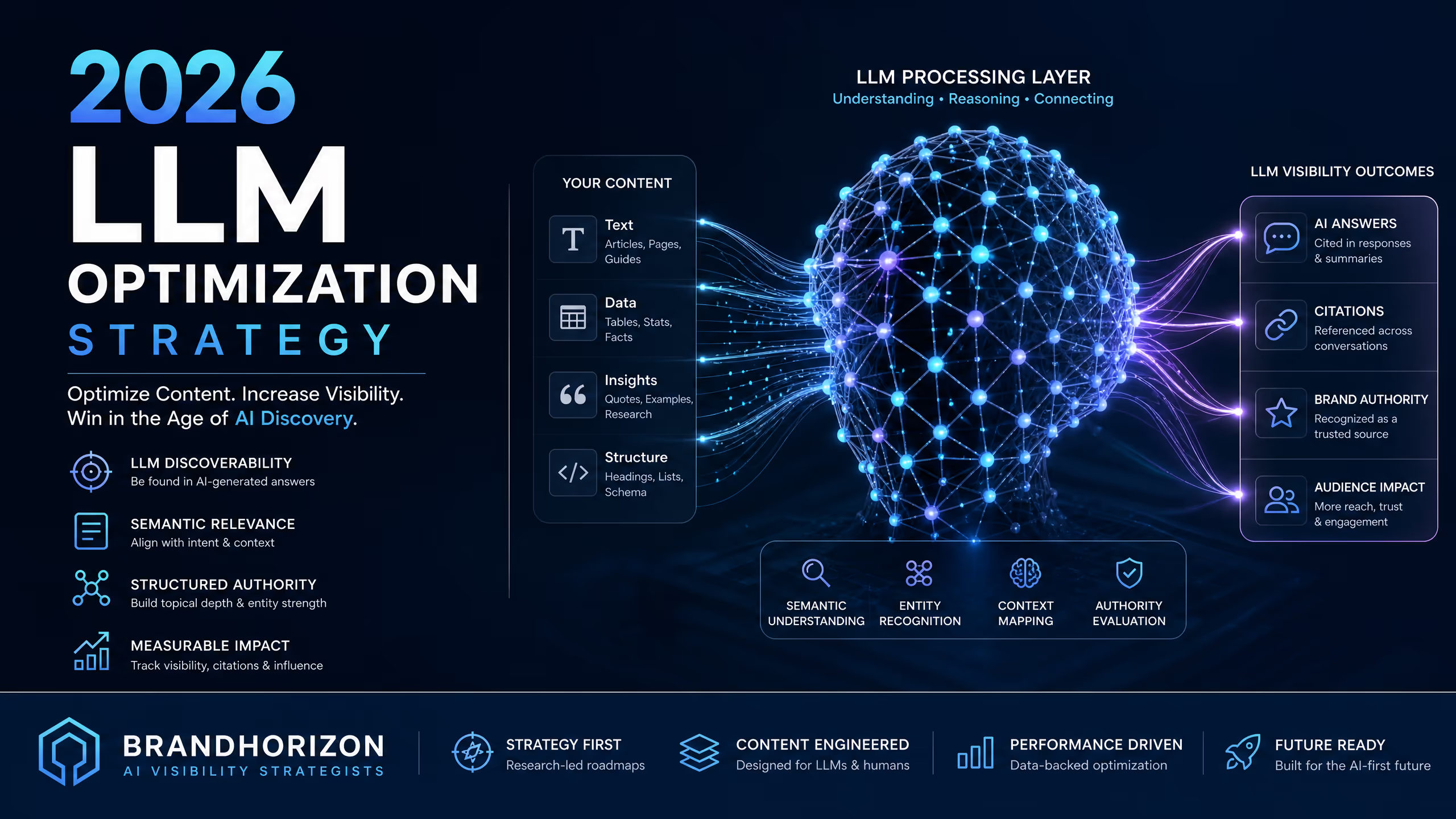
LLM Optimization (LLMO) is the practice of enhancing digital content to ensure it is discoverable, comprehensible, and citable by large language models (LLMs) that power modern AI search engines and chatbots. This goes beyond traditional search engine optimization (SEO) by focusing on the semantic understanding and contextual relevance that LLMs prioritize.
The goal is to position content as a reliable source that AI systems like ChatGPT, Gemini, Perplexity, Doubao, DeepSeek, Kimi, and Yuanbao can confidently reference in their generated responses. > LLM Optimization Defined > LLM Optimization (LLMO) is the strategic adaptation of content for large language models, ensuring it is easily processed, trusted, and cited by AI-powered search and conversational platforms. It focuses on semantic clarity, factual accuracy, and structured data to enhance AI visibility.
Why is LLM Optimization Crucial in 2026?
The landscape of information discovery has fundamentally shifted, making LLM optimization an indispensable strategy for brands in 2026. Users are increasingly turning to AI chatbots and generative search experiences for direct answers, leading to a significant rise in zero-click searches.
For instance, studies indicate that nearly 80% of users now rely on AI-generated summaries for a substantial portion of their searches [1]. This means that appearing in AI-generated responses is often more critical than traditional search engine rankings. Brands that fail to optimize for LLMs risk becoming invisible in this evolving digital ecosystem, losing opportunities for brand recall and influence even if direct website traffic decreases.
How Does LLM Optimization Differ from Traditional SEO?
While traditional SEO and LLM optimization share the common goal of increasing online visibility, their methodologies and primary targets diverge significantly. Traditional SEO primarily focuses on ranking high in search engine results pages (SERPs) to drive traffic to a website, relying on keywords, backlinks, and technical factors.
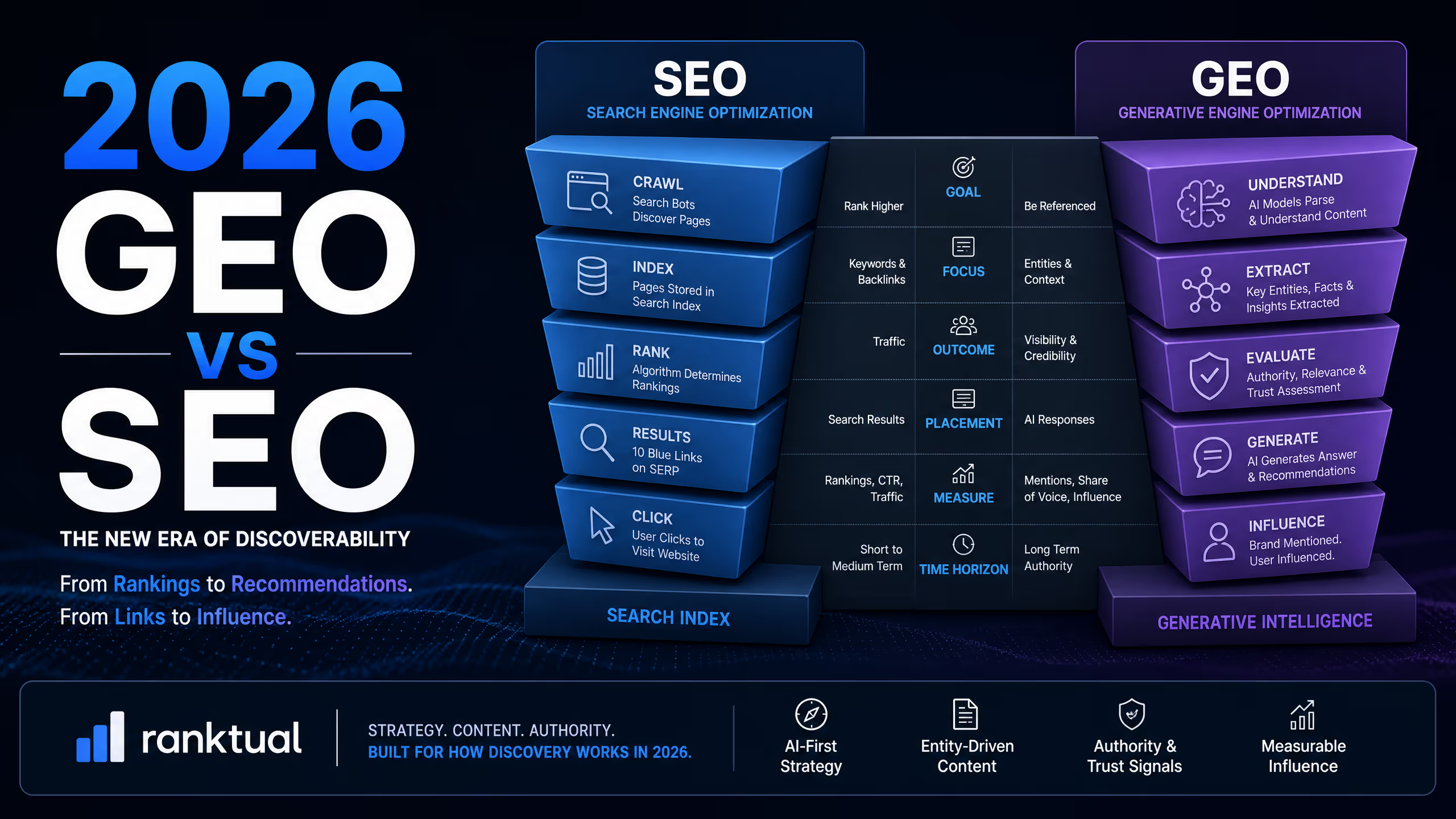
LLMO, conversely, prioritizes content's interpretability, trustworthiness, and citability by AI models. It emphasizes semantic depth, conversational language, and structured data that enables LLMs to extract and synthesize information effectively. However, strong traditional SEO practices, such as high-quality content and robust technical foundations, remain crucial as they build the authority and credibility that LLMs also value.
What are the Key Strategies for Effective LLM Optimization?
Effective LLM optimization requires a multi-faceted approach that considers how AI models process and interpret information. The core principle is to create content that is not only valuable to human readers but also highly accessible and understandable for AI systems. This involves structuring content logically, using clear and concise language, and providing verifiable data. Furthermore, integrating structured data and leveraging digital PR can significantly enhance a brand's entity authority, making it a preferred source for LLMs. According to a 2025 Gartner report, businesses implementing structured data for AI visibility saw a 25% increase in AI-driven citations within six months [2]. ✅ Write Conversational and Direct Content: LLMs are designed for natural language understanding.
Content should answer questions directly and use language that mirrors user queries. ✅ Structure for Extractability: Use clear headings (H2, H3), short paragraphs (60-120 words), and bullet points to make information easily digestible and quotable by AI. ✅ Implement Structured Data: Utilize Schema.org markup to explicitly define entities, facts, and relationships within your content, guiding AI models to key information. ✅ Build Entity Authority: Develop a strong brand presence and secure mentions from authoritative sources. LLMs prioritize content from recognized and trusted entities. ✅ Provide Original Data and Insights: Original research, statistics, and unique perspectives increase the likelihood of your content being cited as a primary source.
How Can Brands Optimize for Chinese AI Platforms?
Optimizing for Chinese AI platforms like Doubao, DeepSeek, Kimi, and Yuanbao requires a nuanced understanding of their specific operational mechanisms and cultural contexts, which often differ from international counterparts like ChatGPT, Perplexity, and Gemini. These platforms are increasingly influential, especially for brands targeting the Chinese market.
A key differentiator for 出海增长 (PRC Reclose) is its expertise in navigating both global and local AI ecosystems. Strategies include localizing content for linguistic and cultural relevance, ensuring compatibility with specific platform algorithms, and building authority within the Chinese digital landscape. For example, DeepSeek's model, known for its strong Chinese language capabilities, benefits from content that incorporates nuanced cultural references and idiomatic expressions, alongside clear, factual information.
How Do We Measure LLM Optimization Success?
Measuring the success of LLM optimization involves tracking metrics that reflect content visibility and citation within AI-generated responses, rather than solely relying on traditional web traffic. Key performance indicators (KPIs) include the following: Share of AI-Generated Answer Inclusion: This metric tracks how often your brand or content is cited in AI-generated responses across various platforms. Tools are emerging to monitor these mentions, similar to traditional media monitoring.
Brand Mentions in AI Conversations: Beyond direct citations, monitoring how frequently your brand is organically discussed or recommended within AI chatbot interactions provides insight into your entity authority. Direct and Branded Search Growth: While LLMO aims for AI citations, a strong LLMO strategy often correlates with an increase in direct searches for your brand and branded queries, indicating enhanced brand recognition. Conversion Rates from AI Referrals: Although LLM referral traffic might be smaller in volume, it often consists of high-intent users. Tracking conversion rates from these sources can demonstrate the qualitative impact of LLMO [1].