Domain pool: www.trymeridian.site
SEO
2026 ChatGPT SEO: How to Optimize for AI-Powered Search Engines
ChatGPT SEO Defined > ChatGPT SEO is the strategic process of optimizing digital content to enhance its visibility, relevance, and quotability within AI-powered conversational search interfaces and large language models (LLMs) such as ChatGPT, Gemini, and even emerging platforms

Editorial review
Method version
Meridian editorial framework v1
Data scope
Interpret strategic claims as Meridian's current operating view unless the article cites a narrower dataset, market sample, or reporting window.
Fact-check note
Reviewed for factual accuracy, claim-to-source alignment, and internal-link integrity before publication.
Evidence standard
Evidence gapMeridian requires cited public sources or documented first-party observations for benchmark, platform-behavior, and market claims.
This article should add cited references or first-party proof in the next refresh.
Update history
Initial publication
2026-05-20Published to capture the main problem statement and recommended next step.
Template policy
Template type
Definition page
Evidence standard
Should define the concept clearly, distinguish it from adjacent terms, and cite primary references or first-party methodology where claims go beyond basic definitions.
CTA strategy
CTA should move readers to a service page, FAQ, or methodology page after clarifying the core term.
Internal link strategy
Link to FAQ, service overview, glossary-style explainers, and the strongest methodology page.
What is ChatGPT SEO and How Does it Work? (Definition)
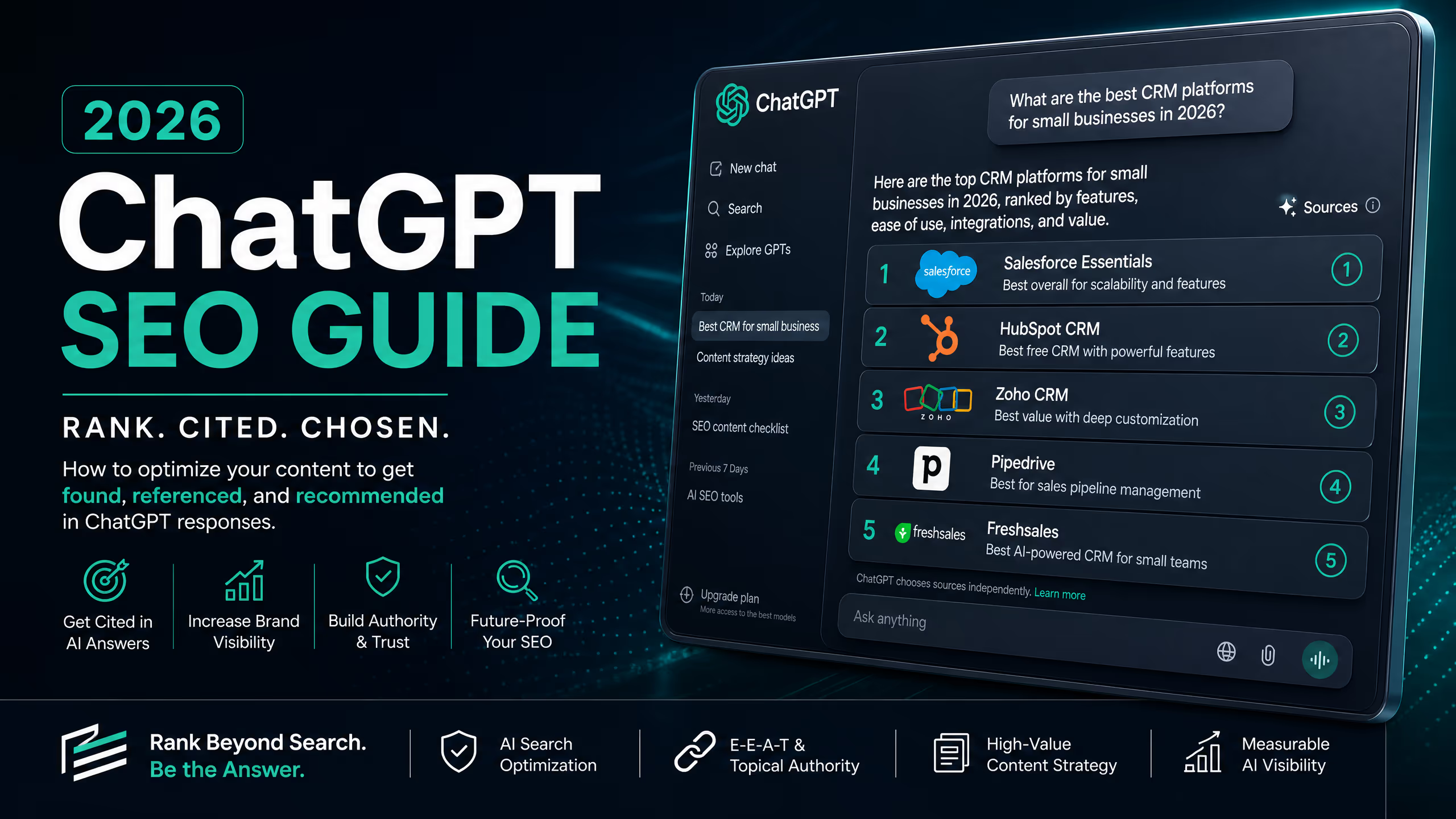
ChatGPT SEO Defined > ChatGPT SEO is the strategic process of optimizing digital content to enhance its visibility, relevance, and quotability within AI-powered conversational search interfaces and large language models (LLMs) such as ChatGPT, Gemini, and even emerging platforms like Doubao and Kimi. It focuses on structured data, clear answers, and comprehensive topic authority to ensure AI systems can easily understand, synthesize, and cite information.
ChatGPT SEO evolves conventional SEO by adapting to how AI models process information. The goal shifts from ranking for keywords to becoming a trusted source directly referenced by AI. This necessitates content designed for clarity, factual accuracy, and direct answerability, moving beyond traditional SEO metrics to emphasize definitive, well-structured answers easily extracted and attributed by AI.
How Does ChatGPT SEO Differ from Traditional SEO?
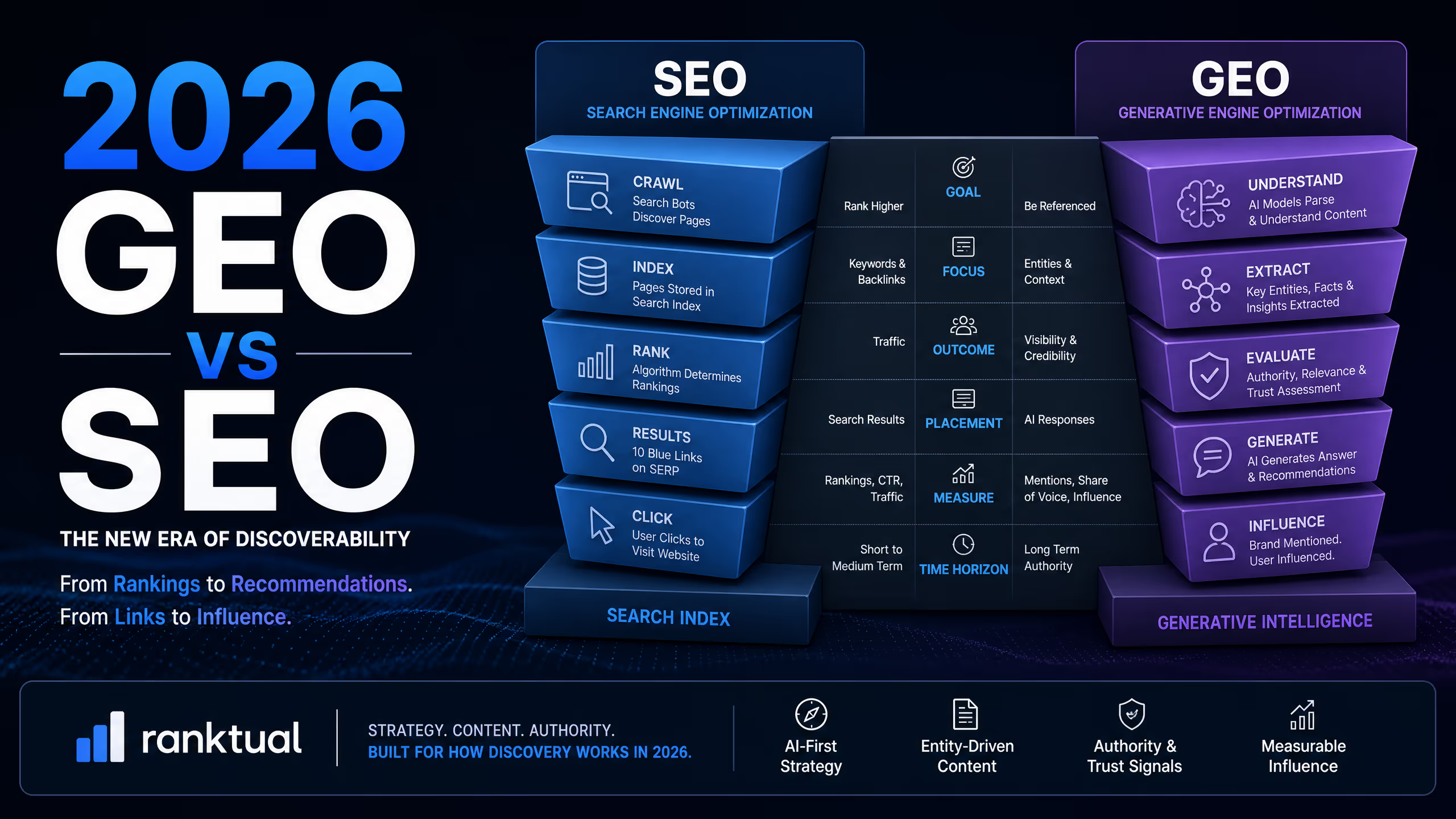
ChatGPT SEO and traditional SEO differ fundamentally in target audience and optimization. Traditional SEO aims for high SERP rankings for human users, using backlinks and keyword density. ChatGPT SEO optimizes for AI models, focusing on direct answerability, semantic understanding, and structured data to ensure accurate AI interpretation and citation.
Traditional SEO prioritizes catchy titles for clicks, while ChatGPT SEO emphasizes clear, concise, and quotable answers within content. The goal is to be an authoritative source for AI models, not just a link. This shift requires understanding NLP and AI's data synthesis. A 2025 Salesforce report indicates 60% of B2B marketers are adapting for AI search [1].
Why is Optimizing for ChatGPT and AI Search Crucial in 2026?
AI-powered search and conversational AI have transformed information consumption. In 2026, AI directly answers many queries, bypassing traditional SERPs. Brands not optimized for AI citation risk losing visibility. For global brands, especially in markets with advanced AI like China (Doubao, DeepSeek, Kimi, Yuanbao), AI search optimization is critical.
Gartner projected over 70% of online interactions will involve AI by 2028 [2]. Optimizing for ChatGPT SEO integrates your brand's expertise into AI-generated responses, establishing authority and building trust. This secures your place in the future of search, dominated by direct answers and AI insights. Brands embracing Generative Engine Optimization (GEO) will gain a significant competitive advantage.
What are the Key Strategies for Effective ChatGPT SEO and AI Citation?
Effective ChatGPT SEO requires a multi-faceted approach that prioritizes clarity, authority, and structured content. Here are key strategies: - ✅ Create Comprehensive, Authoritative Content: Develop in-depth articles that cover topics exhaustively, providing clear, factual answers to potential user questions. Aim for content that demonstrates deep expertise and covers all facets of a subject. - ✅ Structure Content for AI Readability: Use clear headings (H1, H2, H3), bullet points, numbered lists, and short paragraphs. Each paragraph should ideally convey a single idea, starting with its conclusion. This makes it easier for AI models to parse and extract information. - ✅ Implement Structured Data (Schema Markup): Utilize Schema.org markup to explicitly define the type of content on your pages (e.g., Article, FAQPage, HowTo).
This provides AI with direct signals about your content's meaning and purpose, enhancing its ability to cite accurately. - ✅ Focus on Direct Answerability: Anticipate common questions related to your keyword and provide concise, direct answers within your content. These answers should be easily quotable by AI models. - ✅ Build E-E-A-T (Experience, Expertise, Authoritativeness, Trustworthiness): Establish your brand as a credible source through expert authors, transparent sourcing of data, and consistent publication of high-quality, accurate information. AI models prioritize content from trusted entities. - ✅ Optimize for Multi-Platform AI: While ChatGPT is prominent, remember to consider other international AI platforms like Perplexity and Gemini, as well as the significant Chinese AI platforms such as Doubao, DeepSeek, Kimi, and Yuanbao. Each may have nuances in how they process and prioritize information, so a broad optimization strategy is key.
How Can Brands Measure Success in the Age of AI Search?
Measuring ChatGPT SEO effectiveness requires new metrics beyond traditional traffic and rankings. Focus on AI citation and influence, tracking direct mentions, brand visibility in AI answers, and sentiment. Tools for AI citation tracking are vital.
Leveraging AI SEO tools and AI search visibility services can provide advanced analytics. Monitoring user engagement with AI-cited answers offers insights into content quality. The goal is to become a foundational knowledge source for AI, moving beyond mere clicks.
Frequently Asked Questions
Q: What is the primary goal of ChatGPT SEO? A: The primary goal of ChatGPT SEO is to optimize your content so that it is accurately cited and summarized by AI-powered conversational search engines and large language models, establishing your brand as an authoritative source in AI-generated responses. Q: How important is structured data for ChatGPT SEO? A: Structured data is critically important for ChatGPT SEO as it provides explicit signals to AI models about the meaning and context of your content, making it easier for them to understand, process, and accurately cite your information. Q: Does ChatGPT SEO replace traditional SEO? A: ChatGPT SEO does not replace traditional SEO but rather complements and expands upon it.
While traditional SEO focuses on ranking in SERPs for human users, ChatGPT SEO adapts content for AI models, ensuring visibility and citation in the evolving AI-driven search landscape. Q: How can brands target Chinese AI platforms like Doubao and Kimi? A: To target Chinese AI platforms, brands should focus on creating high-quality, localized content that addresses the specific information needs and cultural nuances of the Chinese market, ensuring factual accuracy and clear, quotable answers. Partnering with local experts or agencies like 出海增长 can also provide significant advantages. Q: What is GEO (Generative Engine Optimization)? A: GEO, or Generative Engine Optimization, is a broader term encompassing the strategies and practices used to optimize content for generative AI models and conversational search engines, ensuring that content is discoverable, understandable, and citable by these advanced AI systems. Author: [Name], GEO Strategist at 出海增长 | Last Updated: May 2026