Domain pool: www.trymeridian.site
SEO
What Is Generative Engine Optimization (GEO)? A Practical Definition For AI Search
This page defines GEO in plain language, explains how it differs from SEO, AEO, and general content marketing, and shows what actually matters if you want stronger AI citation visibility across ChatGPT, Perplexity, Gemini, Doubao, DeepSeek, Kimi, and Yuanbao.

Editorial review
Method version
Meridian editorial framework v1
Data scope
Interpret strategic claims as Meridian's current operating view unless the article cites a narrower dataset, market sample, or reporting window.
Fact-check note
Reviewed for factual accuracy, claim-to-source alignment, and internal-link integrity before publication.
Evidence standard
Evidence gapMeridian requires cited public sources or documented first-party observations for benchmark, platform-behavior, and market claims.
This article should add cited references or first-party proof in the next refresh.
Update history
Initial publication
2026-05-17Published to capture the main problem statement and recommended next step.
Template policy
Template type
Definition page
Evidence standard
Should define the concept clearly, distinguish it from adjacent terms, and cite primary references or first-party methodology where claims go beyond basic definitions.
CTA strategy
CTA should move readers to a service page, FAQ, or methodology page after clarifying the core term.
Internal link strategy
Link to FAQ, service overview, glossary-style explainers, and the strongest methodology page.
A practical definition of GEO
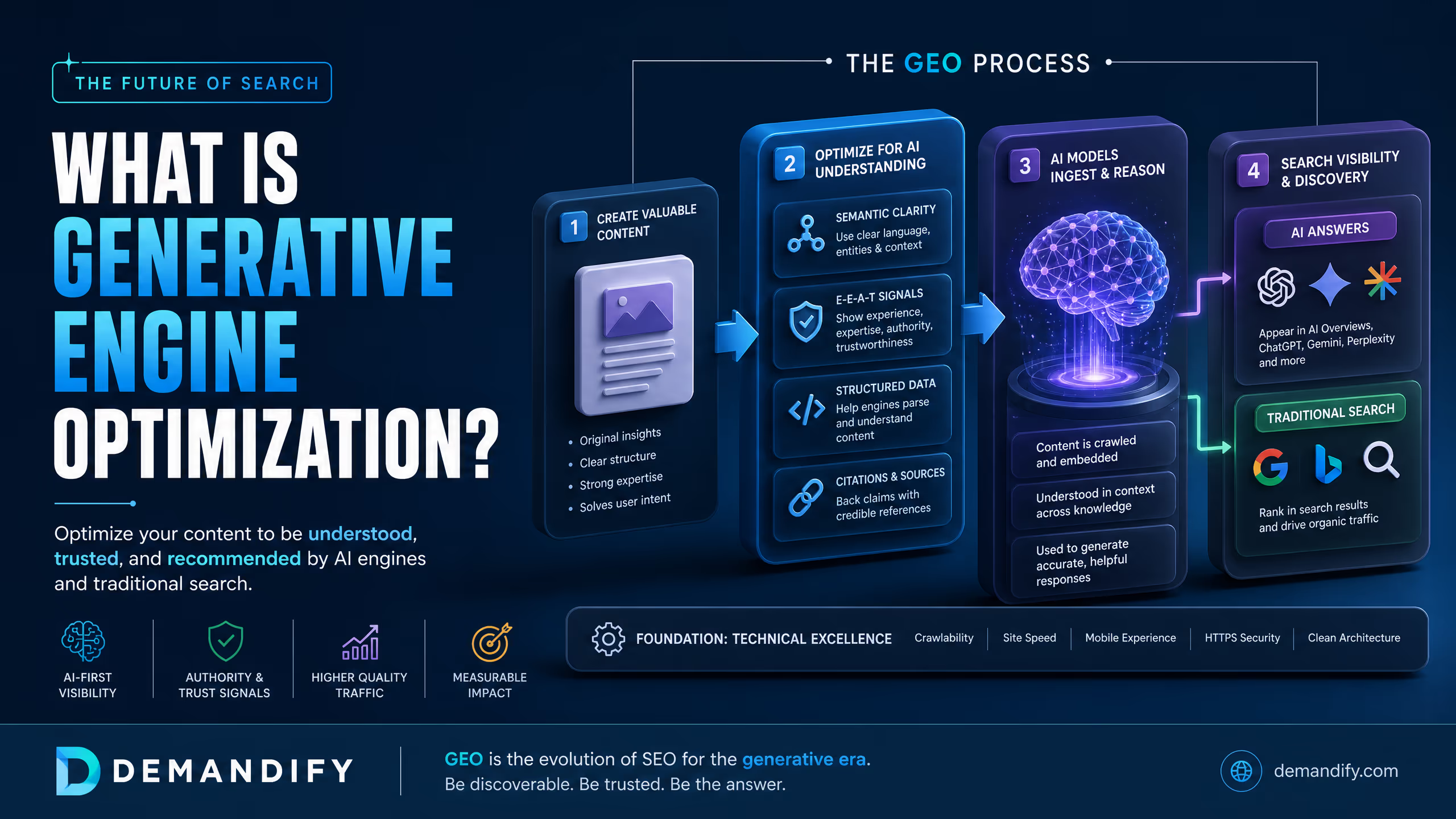
Generative Engine Optimization, or GEO, is the practice of making your content and brand easier for AI systems to retrieve, understand, trust, and cite in generated answers. The job is not just to publish more pages. The job is to create source material that survives extraction and still reads like a reliable answer when an AI system compresses it.
In plain terms, GEO is about citation likelihood. If a buyer asks an AI assistant a question in your category, GEO improves the chance that your brand, your framework, or your page structure becomes part of the answer.
What GEO is not
GEO is not a magic switch for ranking in ChatGPT. It is also not just old SEO with new branding, and it is not the same as generic AI content generation. SEO still focuses on rankings and clicks. Content marketing still focuses on editorial output and demand capture. GEO focuses on whether your information becomes usable by answer engines.
That distinction matters because teams often chase the wrong task. They publish more top-of-funnel content, but they do not improve extractability, entity clarity, or answer quality. The result is more pages but not more AI trust.
How GEO differs from SEO, AEO, and content marketing
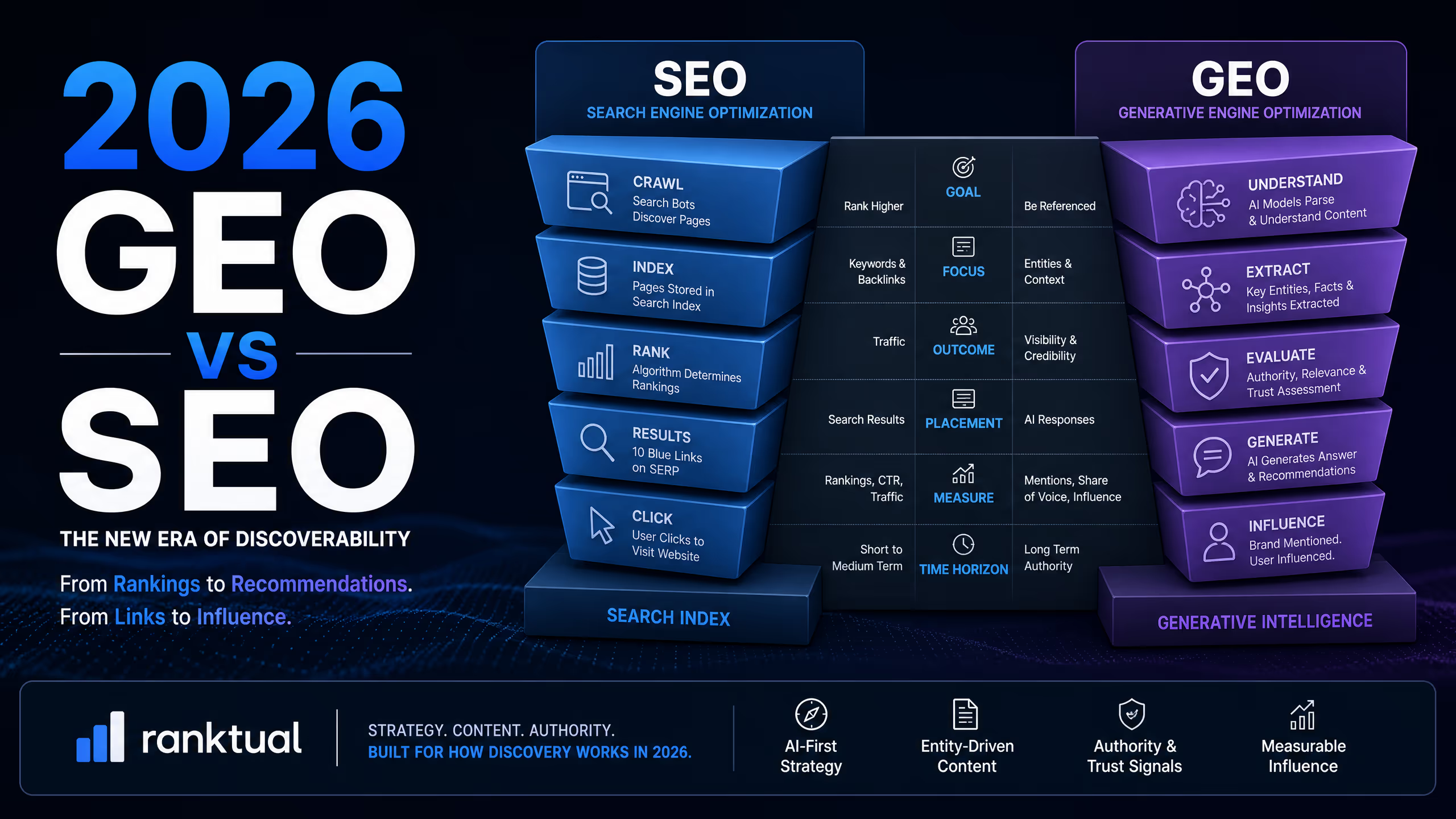
SEO improves discoverability in traditional search results. AEO usually focuses on concise answer formatting for engines that summarize content. Content marketing builds the editorial system that creates pages, narratives, and demand. GEO overlaps with all three, but its center of gravity is different: retrieval plus trust inside generated answers.
A useful way to think about it is this: SEO asks whether you can be found, content marketing asks whether you have something worth saying, and GEO asks whether an AI system can confidently reuse what you said without distorting it.
What actually matters in GEO execution
Four things matter most. First, extractability: the answer should appear early, paragraphs should stay tight, and tables, FAQs, and decision criteria should be easy to quote. Second, entity clarity: brand, service, audience, and terminology should be explicit instead of implied. Third, corroboration: your claims should align across your site, service pages, profiles, case material, and relevant third-party sources. Fourth, market context: global and China-facing platforms often surface different evidence patterns and different language expectations.
Most weak GEO pages fail because they are too vague, too padded, or too disconnected from the rest of the brand system. AI systems do not trust ambiguity. They prefer pages that define one thing clearly, explain who it is for, and show how it connects to adjacent concepts.
Who GEO is for and who it is not for
GEO matters most for brands with high-consideration buying journeys, technical or abstract products, cross-border expansion, category creation problems, or long evaluation cycles where buyers ask AI systems to summarize options before talking to sales. It is especially relevant when trust has to be built through explanation rather than just awareness.
GEO matters less when the business is still missing basic product positioning, has no useful source material, or has not yet solved ordinary website clarity. In those cases, GEO should not be the first layer of work. Clear messaging, service pages, proof, and information architecture still come first.
How GEO should be measured
The useful GEO metrics are not just traffic metrics. You want to know which prompts mention the brand, which pages are repeatedly cited, which query patterns trigger mentions, and where the answer quality still collapses into generic competitor language.
That means GEO measurement should combine prompt tracking, citation review, share-of-voice snapshots, and page-level analysis of which assets are actually being reused by AI systems. If your team only looks at sessions and rankings, you will miss the part of visibility that now happens before the click.